SASE Explained in Dialogue — 🧙♂️ Professor and 🐣 Student Ask What Actually Changes
What changes when a company adopts SASE instead of its existing VPN and firewalls? A professor and student challenge SD-WAN, SSE, ZTNA, migration costs, legacy bypasses, stolen sessions and MFA enrollment, beyond the marketing.
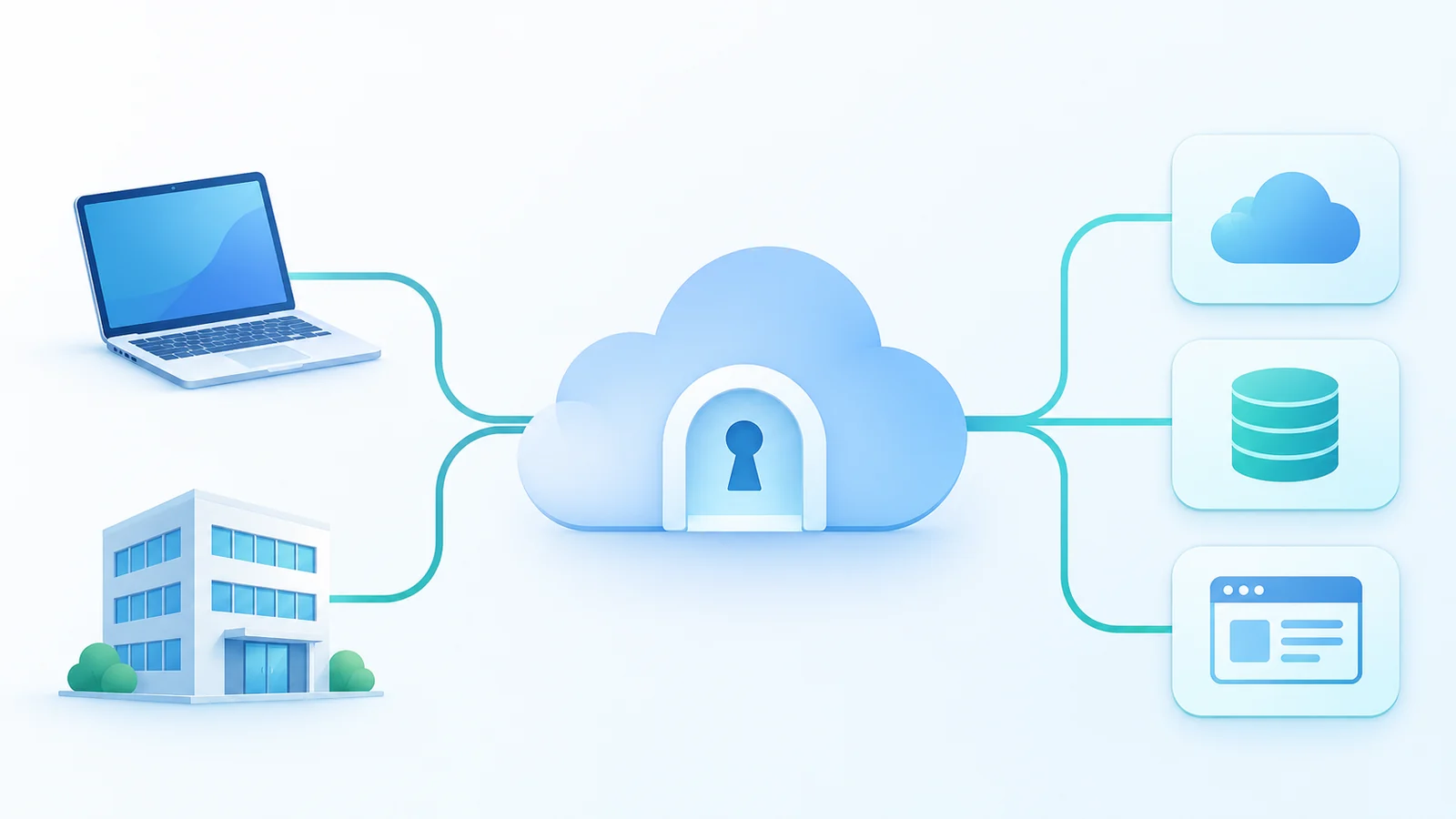
A student comes to the professor’s lab after seeing an ad promising to transform security and operations with SASE. The sales pitch sounds impressive. The trouble is, the student does not even know how to pronounce it.
We are installing SASE. What exactly are we installing?
🐣 (Student) “Professor, how do you pronounce SASE, anyway? Sass-ee? S-A-S-E?”
🧙♂️ (Professor) “In Japan you will hear ‘sass-ee’ or ‘sah-see.’ It stands for Secure Access Service Edge.”
🐣 (Student) “Sass-ee. How friendly. I was expecting a cute cybersecurity mascot.”
🧙♂️ (Professor) “The name may be cute. The quotation rarely is.”
🐣 (Student) “So what is it? People talk as if ‘install SASE’ were a magic spell that makes a company safe. Do we buy a box? Hang up a protective charm?”
🧙♂️ (Professor) “A charm cannot filter packets. SASE is an architecture that brings network connectivity and security functions together, predominantly through cloud-delivered services.”
🐣 (Student) “There it is: architecture. I asked what was inside the box and got a philosophy lecture. When the company signs, what actually arrives on the engineer’s desk?”
🧙♂️ (Professor) “A contract and a pile of configuration work. Perhaps endpoint agents, integration with the identity provider, connectors to internal applications, or changes to branch-office traffic paths. Not every deployment needs all of those.”
🐣 (Student) “The work arrives before the security. And ‘we installed SASE’ still doesn’t tell me what changed.”
🧙♂️ (Professor) “Quite. ‘We remodeled the kitchen’ could mean a new stove, new plumbing, or simply a new pot.”
🐣 (Student) “A pot labeled ’next generation,’ with yesterday’s burnt curry still inside.”
🧙♂️ (Professor) “The pot is innocent. We need to inspect how it is used. With SASE, first find out where the traffic goes and where it is inspected or controlled.”
📌 Note: How the name is pronounced in Japan
In Japanese, both サシー and サッシー are used. SCSK’s Japanese glossary records both readings. Pronunciation is not a technical distinction.
Why move controls toward the cloud?
🐣 (Student) “What was wrong with our existing firewalls and proxies? Is this one of those ’throw out the working appliance because it’s old’ schemes?”
🧙♂️ (Professor) “Age alone is not the argument. Imagine an employee working from home and using a cloud service, but their traffic still has to go through headquarters over a VPN to be inspected before going out to the internet.”
🐣 (Student) “We go to the cloud via headquarters? The employee works remotely, but the packets still have to commute every morning.”
🧙♂️ (Professor) “Even packets can get caught in rush hour. If that detour or congestion at headquarters causes problems, cloud-based access points closer to the user may be worth considering. Applying common policies to home workers and branches is another goal.”
🐣 (Student) “So traffic gets a better work-life balance. It must be faster!”
🧙♂️ (Professor) “Only if the path improves. The access point’s location, congestion and inspection overhead can make it slower instead. ‘It’s in the cloud, therefore it’s fast’ is like promising everyone a convenient hotel because the brochure says ’three minutes from the station.’”
🐣 (Student) “If I’m in Hokkaido, a hotel three minutes from Hakata Station in Fukuoka isn’t particularly nearby.”
🧙♂️ (Professor) “Precisely. Measure performance from the actual offices and on the actual applications. If traffic already reaches the cloud directly and is appropriately protected, the supposed benefit of removing that detour does not apply.”
A growing crowd of acronyms: SD-WAN, SSE and ZTNA
🧙♂️ (Professor) “To understand SASE, it helps to distinguish the network component, SD-WAN, from the security component, SSE.”
🐣 (Student) “One acronym went in and two came out. Are these creatures that multiply when you splash water on them?”
🧙♂️ (Professor) “There are more to come. Focus on their jobs. SD-WAN is Software-Defined WAN: it chooses traffic paths across wide-area links between sites according to link conditions and policy.”
🐣 (Student) “So it chooses the road. What does the other one do?”
🧙♂️ (Professor) “SSE means Security Service Edge. It groups functions that protect web browsing, cloud-service use and access to internal applications. It decides whether traffic is permitted and what to inspect.”
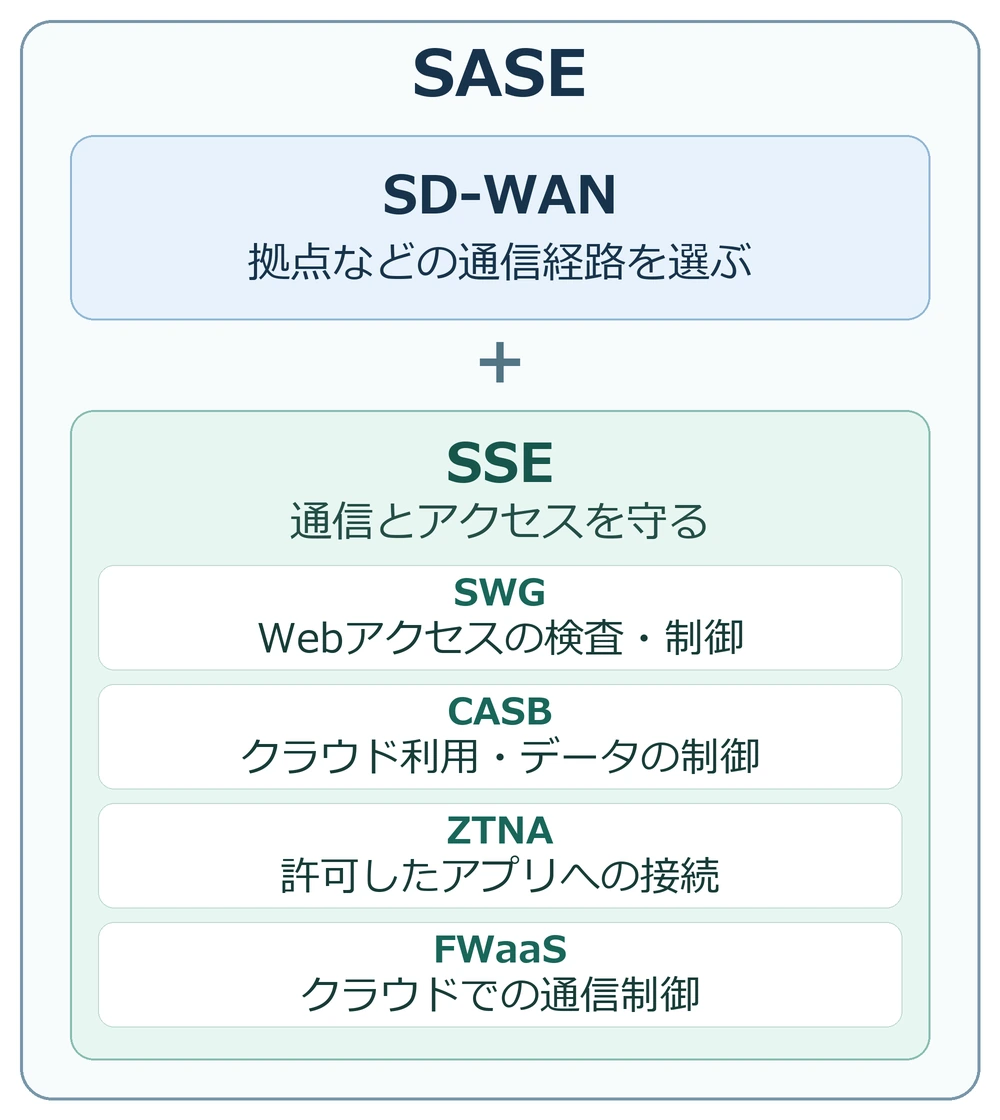
🐣 (Student) “Hold on. There are four more creatures inside SSE!”
🧙♂️ (Professor) “This is not a monster encyclopedia. Let us list their responsibilities instead.”
| Function | Main role |
|---|---|
| SWG (Secure Web Gateway) | Inspects and controls web destinations and content |
| CASB (Cloud Access Security Broker) | Provides visibility and controls over cloud-service use and data handling |
| ZTNA (Zero Trust Network Access) | Authorizes access to permitted applications and resources based on user, device and other conditions |
| FWaaS (Firewall as a Service) | Delivers firewall traffic controls as a cloud service |
🐣 (Student) “Hang on, proxies and firewalls already do some of that. Have old acquaintances just changed their stage names and relaunched their careers?”
🧙♂️ (Professor) “A fair question. These are not all brand-new defenses. But changing where functions run, how traffic reaches them and how policies and operations are coordinated can matter. We must determine whether anything beyond the stage name has changed.”
🐣 (Student) “What if a vendor calls its offer SASE but doesn’t mention SD-WAN? Is one of the creatures missing?”
🧙♂️ (Professor) “It may be an SSE-centered offer. Perhaps existing WAN links stay in place, or the team starts with ZTNA alone. Products package different functions, so never infer the deployment scope from the label on the contract.”
📌 Note: What SASE and SSE cover
SASE combines networking and security; SSE provides the security side. Neither term requires every possible function to be deployed in a single step. Check the actual product capabilities and the scope of the contract and migration.
See Cloudflare’s SASE overview and its SASE versus SSE comparison.
VPN is the building key, ZTNA is the room key. Is it that simple?
🐣 (Student) “ZTNA bothers me most. People say it replaces VPN. What is actually different?”
🧙♂️ (Professor) “Typically, VPN starts by connecting a user to a private network, whereas ZTNA starts with access to the specific application they need. Think of entering a building versus being admitted to a particular room.”
🐣 (Student) “Wait. A firewall can restrict where you go after connecting to VPN. Isn’t it unfair to describe the old system as ‘open the front door and enjoy an all-you-can-enter buffet’?”
🧙♂️ (Professor) “You’ve caught me. My analogy fired the corridor security guard without warning. A VPN can restrict destinations and use multifactor authentication and device certificates. VPN does not automatically mean unrestricted access.”
🐣 (Student) “What if I only need the expense-reporting app?”
🧙♂️ (Professor) “With VPN, you can connect to the network and then allow only that destination. With ZTNA, you can define access as ’this person, from this device, may use this expense application’ from the outset.”
🐣 (Student) “So with proper configuration they can sometimes allow access to exactly the same things.”
🧙♂️ (Professor) “Indeed. Their design and operating models differ; the product names do not determine which is safer. Compare supported protocols, how device conditions are verified and how practical the policies are to maintain.”
🐣 (Student) “Then what if someone makes ZTNA easy by granting every employee access to every app?”
🧙♂️ (Professor) “They have bought expensive room locks and handed everyone a complete key ring. The locksmith profits; the separation disappears.”
📌 Note: Comparing VPN and ZTNA
VPN access can be narrowly constrained through authentication, firewall policy and segmentation. Overly broad ZTNA access can likewise increase the impact of a compromise. The slogan ‘VPN is unsafe, ZTNA is safe’ does not evaluate the deployed design.
See Cisco’s ASA VPN filter configuration example.
Does one console mean less work?
🐣 (Student) “The ad promises lower operating costs through consolidation. At least a single administration screen sounds easier.”
🧙♂️ (Professor) “There is value if teams can apply consistent policies and spend less time correlating separate logs. It may also reduce the need to replace hardware at individual branches.”
🐣 (Student) “And who determines whether all our existing rules can move? What if mysterious exceptions have accumulated in layers like geological strata?”
🧙♂️ (Professor) “…That silence is labor missing from the quotation.”
🐣 (Student) “You’re the one being silent! Are you planning to fill it with someone’s overtime?”
🧙♂️ (Professor) “We need to inventory existing rules, check feature parity, integrate identity systems, deploy endpoint changes, notify users and prepare incident procedures. Consolidation itself takes work. Fewer tabs on a screen do not guarantee fewer midnight calls.”
🐣 (Student) “And if one old business app won’t work, so we decide to keep VPN just for that? Like furniture that won’t fit through the door of the new apartment?”
🧙♂️ (Professor) “If you keep paying rent on the old apartment for the furniture, you have two rents. A retained VPN means counting both the new subscription and the old product’s maintenance and operational effort.”
🐣 (Student) “So the plan to simplify things becomes double rent. We need to ask which products can actually be retired, and when.”
🧙♂️ (Professor) “Exactly. For example, compare five-year total cost of ownership, or TCO, across these items:”
| What to compare | Costs or benefits not to overlook |
|---|---|
| Keeping the existing environment | Contracts, equipment replacement, circuits, support and routine administration |
| Moving to the new environment | Discovery, design, compatibility tests, migration, training and parallel operations |
| Running the new environment | New subscriptions, retained products, monitoring, exceptions and incident response |
| Actual improvements | Annual effort, change lead time, traffic quality and access-control precision |
🐣 (Student) “What if everyone’s traffic goes through the same cloud provider and that provider goes down? We all get to stop working together?”
🧙♂️ (Professor) “Depending on the design, failures can have a broad impact. Find out what stops working when the service or identity platform is unavailable, who restores it and whether settings and logs can be exported if you change providers. Price alone can hide the cost of an exit.”
🐣 (Student) “Wouldn’t cleaning up our existing products and rules solve some of these problems? Before buying a fancy new cabinet, should we clear the floor?”
🧙♂️ (Professor) “…As painful as it is to hear, yes. Compare that option too. SASE may help, or improving the existing system may suffice. Needing a new cabinet is a separate question from picking up the laundry.”
A brand-new front gate, with the old side door still open
🐣 (Student) “Suppose we keep the old VPN ‘for now.’ Is it enough to lock down the new ZTNA path?”
🧙♂️ (Professor) “Not if the same internal app is still reachable through VPN under weaker conditions. That is a bypass: facial recognition at the front gate and a sign saying ‘come on in’ at the side door.”
🐣 (Student) “ZTNA verifies the device, but VPN only asks for a username and password and lets you roam? Facial recognition versus knocking three times?”
🧙♂️ (Professor) “Exactly. Watching ZTNA logs while ignoring VPN logs is another risk. An intruder will not wait for the ribbon-cutting ceremony at the new gate.”
🐣 (Student) “Then weld the side door shut. Abolish VPN today!”
🧙♂️ (Professor) “Do not lock the employees out. Coexistence may be necessary. Limit who uses the old path and where it reaches; align authentication, device checks, monitoring and maintenance. Record why the path remains, who owns it and when to revisit the decision.”
🐣 (Student) “‘During the transition’ is such a useful phrase. Without an end date, our grandchildren could still be in the transition.”
🧙♂️ (Professor) “An excellent observation. Completion criteria must include either retiring the old path or establishing controls over the path you retain, not merely bringing the new one online.”
📌 Note: Conditions for retaining legacy paths
Coexistence with existing infrastructure is contemplated by NIST SP 800-207, §7.2. Coexistence is not inherently the problem. The problem is an uncontrolled route to a valuable resource. A path that cannot yet be removed still needs suitable authentication, monitoring, maintenance and an accountable owner.
Is Zero Trust safe even when someone impersonates you?
🐣 (Student) “SASE, ZTNA and Zero Trust have now become one big box in my head. I’ve achieved integration, mentally at least.”
🧙♂️ (Professor) “That sounds more like stuffing everything in a closet. Zero Trust is a security approach that evaluates the user, device, target resource and other conditions rather than trusting someone just because they are inside the corporate network. ZTNA is an access-control mechanism. SASE combines networking and security delivery.”
🐣 (Student) “So buying SASE doesn’t earn us a ‘Zero Trust completed’ stamp?”
🧙♂️ (Professor) “You can stamp the paperwork, but not the risk away. You still need least privilege, endpoint protection and ways to detect suspicious behavior. Authorization inside a business application also matters.”
🐣 (Student) “Does ’never trust’ mean I must prove my identity every time I open a page? If I give up trying, unauthorized access does drop to zero.”
🧙♂️ (Professor) “It does not mean forcing users to type credentials at every click. Access decisions can incorporate session and device state. How often checks happen and whether access can be revoked mid-session depend on the product and configuration.”
🐣 (Student) “What if someone steals my password? They can show my name tag to the guard.”
🧙♂️ (Professor) “MFA and effective device checks may stop them, giving stronger protection than a password alone.”
🐣 (Student) “But what if they steal an already authenticated session? They have the admission ticket from after the guard checked it.”
🧙♂️ (Professor) “That is different. A stolen session cookie or equivalent token can sometimes be reused without repeating the MFA challenge. Protections against replay matter, but ’the user completed MFA’ alone is not enough.”
🐣 (Student) “The ticket was checked so carefully, but somebody picked up a staff armband inside. Now the thief walks around saying ‘I’m authorized.’ I hate that.”
🧙♂️ (Professor) “Quite. If the legitimate computer itself is compromised, the attacker may act through an enrolled endpoint. Passing a device check does not prove that every subsequent action is legitimate.”
📌 Note: Risks after authentication
MFA is an important defense, but it does not automatically eliminate stolen-session or compromised-endpoint risk. In addition to preventing entry, design limits on the privileges and resources reachable after entry, and ways to detect and stop misuse.
See Microsoft’s explanation of cloud token theft and NIST SP 800-207, §5.3 on compromised credentials and devices.
🐣 (Student) “Then are we doomed the moment someone impersonates us? Zero Trust will believe the impostor, too.”
🧙♂️ (Professor) “It cannot guarantee catching every impostor. That is why we also limit the damage after entry. A compromised account allowed only into expense reporting may be unable to move into other systems. Expense data itself could still be at risk.”
🐣 (Student) “So we can keep them from ransacking the entire house, but the wallet in the room they entered might still disappear. Smaller damage is not zero damage.”
🧙♂️ (Professor) “Precisely. Think about permissions within the application, additional confirmation for sensitive actions, audit trails, anomaly detection and invalidating malicious sessions. The revealing question is: ‘What can an attacker do after getting through authentication?’”
Who is allowed to add another MFA key?
🐣 (Student) “I’ve thought of something worse. Once an attacker gets in, what if they enroll their own phone as an MFA method? Next time they can confidently say ‘yes, that’s me.’”
🧙♂️ (Professor) “If the controls around enrollment can also be bypassed, an attacker-controlled authenticator may become attached to the account. Provided other login requirements are met, that can enable persistent access.”
🐣 (Student) “They don’t just cut a spare key; they persuade the building manager to register it as an official one. Such conscientious paperwork for a burglar.”
🧙♂️ (Professor) “Exactly. A strong login screen is not the end of the design. Protect adding or changing MFA methods and account recovery after a lost device.”
🐣 (Student) “Where do we inspect the spare-key counter?”
🧙♂️ (Professor) “Start with whether enrollment requires sufficiently strong reauthentication. Can enrollment devices and paths be restricted? Does the user receive notice, and can administrators audit changes?”
🐣 (Student) “A notification buried among twenty ‘important announcements’ a day? I’m not feeling confident.”
🧙♂️ (Professor) “Do not rely on notifications alone. Combine enrollment restrictions with auditing, and revoke unauthorized authenticators and sessions when found. If the recovery help desk is weak, an attacker can re-enroll through that route. Recovery belongs in the same design.”
📌 Note: Protect MFA enrollment, too
MFA design must cover adding and changing authenticators and recovering accounts, not just the initial sign-in. Combine authentication at enrollment, user notification, auditing and revocation of malicious authenticators.
See NIST SP 800-63B-4, §4.1.2.1 on binding additional authenticators. Check the exact registration and recovery procedures against your identity platform and required assurance level.
🐣 (Student) “Judging security by the ‘MFA enabled’ checkbox is like boasting about a thick safe door while handing out spare keys beside the cash register.”
🧙♂️ (Professor) “It may not be quite that careless, but your point stands. MFA matters, and the enrollment and recovery process needs protecting too. Rather than mocking the safe, examine how its keys are issued.”
What would you ask before adopting SASE?
🐣 (Student) “I’m starting to see what to ask a vendor if our company considers this.”
🧙♂️ (Professor) “Go on. What would you ask now?”
🐣 (Student) “What gets better compared with improving the system we already have without buying SASE? ‘It’s next generation’ isn’t an answer. I could put that label on our cooking pot.”
🧙♂️ (Professor) “Very good. Now let the architecture diagrams, test results and quotation do their work.”
The student writes “Questions before adoption” in a notebook:
- How does traffic change? Can the before-and-after diagrams show routes and control points from homes and branches to each application?
- What can we retire? Which products and routes will go, and when? Do retained systems have a reason and an owner?
- What new threats can we address? Can the vendor demonstrate specific controls that were previously unavailable, including their prerequisites?
- Who will verify business compatibility? How will applications, exceptions and network quality be tested, in which environments and by whom?
- How will cost and effort change? Does a five-year TCO and annual operating-effort estimate include migration, parallel running and products that remain?
- What happens after a successful impersonation or an outage? How are MFA enrollment, stolen sessions, endpoint compromise and cloud or identity-platform failure handled?
🐣 (Student) “Wait, this isn’t actually an argument against buying SASE.”
🧙♂️ (Professor) “Of course not. It can be a strong option when the requirements fit. Do not discard a useful tool merely because its name became fashionable. Just do not delegate the explanation of its value to a four-letter acronym.”
🐣 (Student) “Then let’s start with your lab’s own architecture diagram. What’s that router at the back of the shelf connected to? The dust is bigger than the device.”
🧙♂️ (Professor) “…It contains the wisdom of many years of uninterrupted operation.”
🐣 (Student) “Uh-huh. Why is it still there, who’s responsible for it, and exactly how many years does ‘for now’ mean?”
🧙♂️ (Professor) “…A student’s growth can sometimes be a cruel thing.”
Conclusion: Look past the sign and ask what consolidation eliminates
SASE can be marketed as a buzzword before anyone explains its substance. At its core, it is an architecture for combining existing networking and security functions around cloud delivery, potentially consolidating services, products and dashboards. A single administration console does not automatically improve security or operational efficiency.
But if a deployment meets the actual requirements and removes duplicated VPN, firewall or proxy functions and unnecessary paths, consolidation can have real value. Identify which products and tasks will disappear, and verify that the benefits justify migration and ongoing costs.
If the old products remain and everyone must configure and monitor two systems, buying a cabinet to tidy up has only made the room more crowded. Rather than judging the novelty of the label, ask what can be simplified or retired while still meeting the requirements.
You can read another conversation between these two in Learning Serverless through Dialogue.