From yards to metres and Japanese shaku: convert 122 units of length
Convert 10 yards to 9.144 metres and 30.1752 Japanese shaku, then save the conversion factors and sources alongside the results in a TSV file.
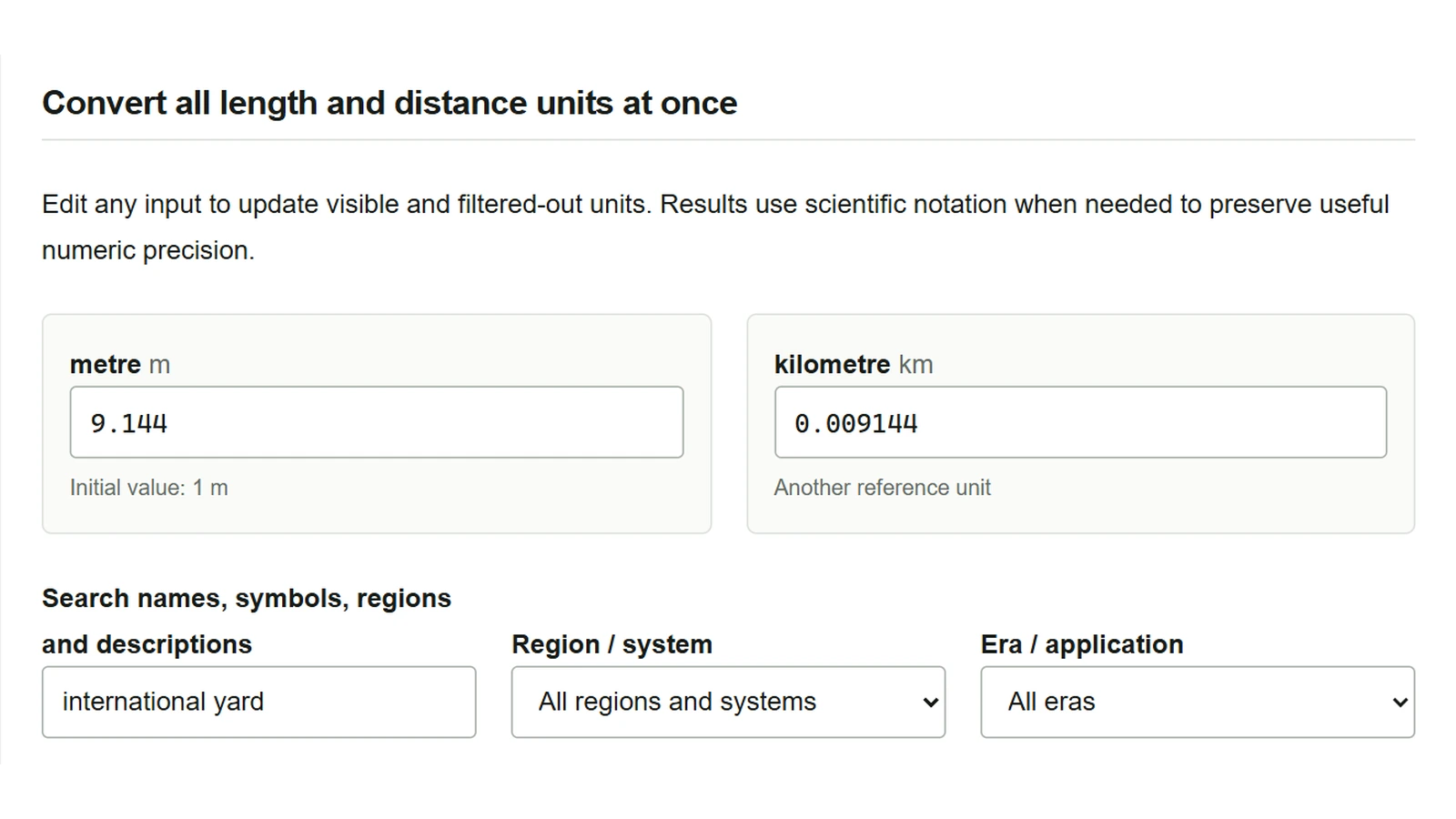
A drawing calls for 10 yd, and you need to record the dimension in metres. If you’re checking it against a measurement in shaku, you’ll also need to know which definition the document uses. Enter a value in the World Length and Distance Units Converter — Historical and Regional Standards to see it expressed in metres, kilometres and other units at once.
The converter covers 122 units, including yards, miles, the Japanese shaku and ken, astronomical units and light-years. Search by name or symbol, or filter by region or system, period or use, and the basis for conversion. The browser performs the calculations locally.
Convert 10 yards to metres
- Enter
international yardin Search names, symbols, regions and descriptions. The English name works in every language version. - Enter
10in the quantity field for international yard, the name shown in the English screenshot. - Read 9.144 in the pinned m field. The yard row shows the factor 1 yd = 0.9144 m.
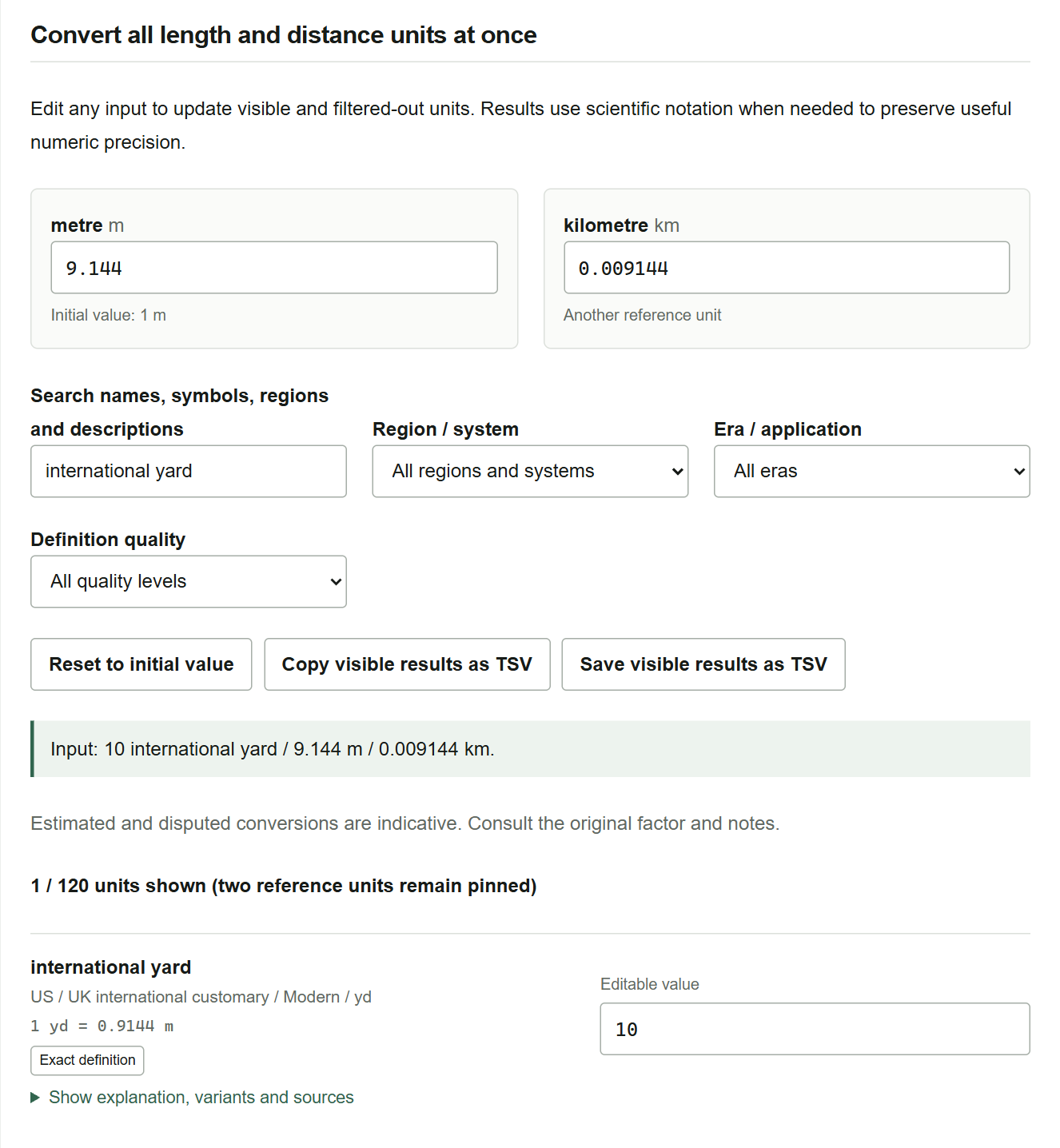
Convert to shaku and save the definition and sources
- Leave the quantity as it is and replace the search term with
Japanese shaku. Filtering keeps the 10-yard input as the basis for the results. - Find 30.1752 in the Japanese shaku row. Open Show explanation, variants and sources to see the references and the modern kanejaku definition used here, 1 shaku = 10/33 m. The kanejaku was the standard carpenter’s shaku.
- Select Save visible results as TSV. The TSV includes units matching the filters and the pinned m and km rows, along with converted values, factors, notes and source URLs.
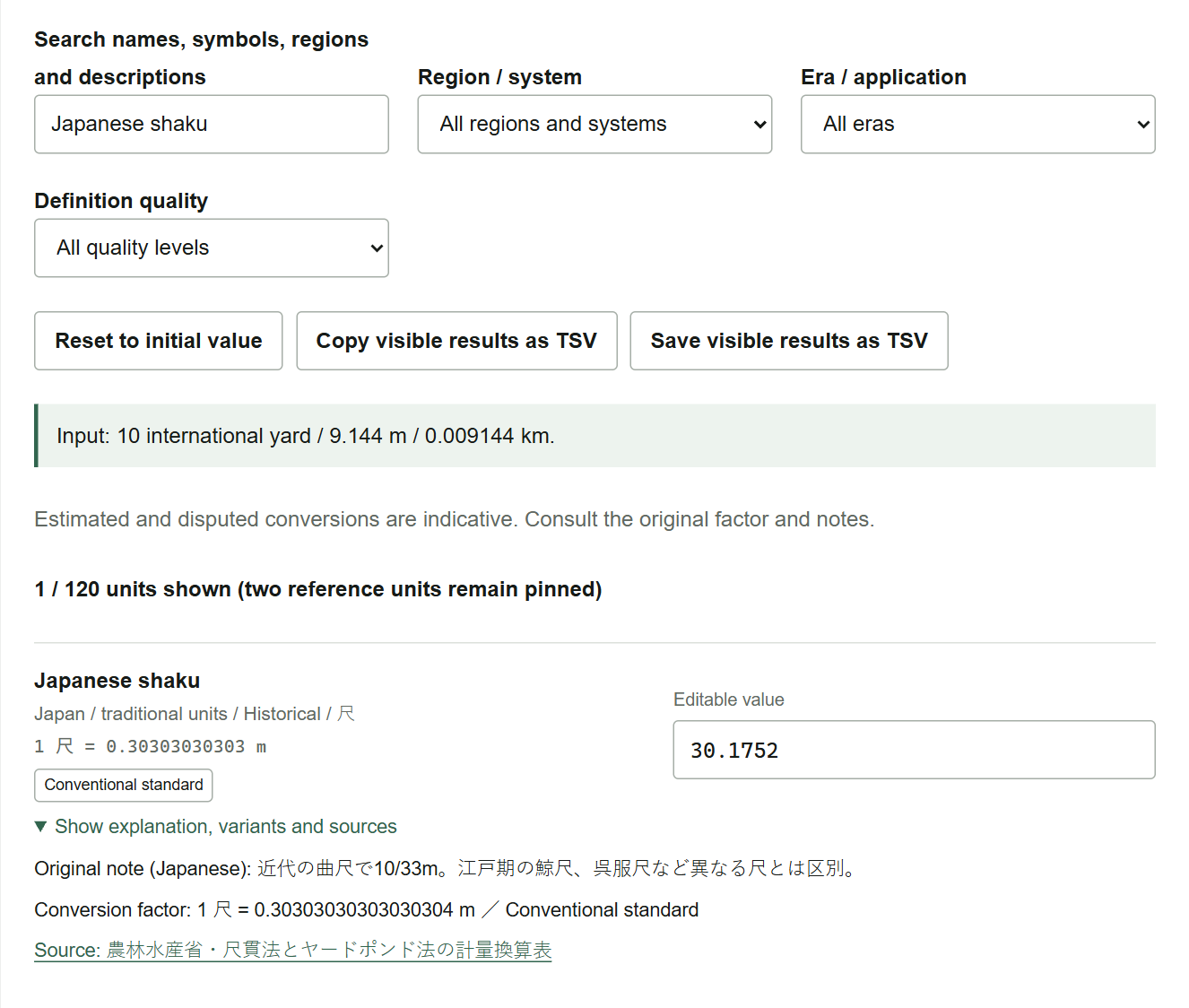
For a shaku measurement in an older document, check its date and purpose against the definition you select. The kujirajaku used in Japanese tailoring, for example, has a different factor. When copying a result, record the definition alongside it, such as “modern kanejaku,” so the conversion can be checked later.