Calculate performance duration from BPM and bars: three plays in 6/8
How long does it take to play 12 bars of 6/8 three times? Enter dotted quarter note = 72 or eighth note = 216 in the calculator. See how to time a practice session with tempo changes and breaks.
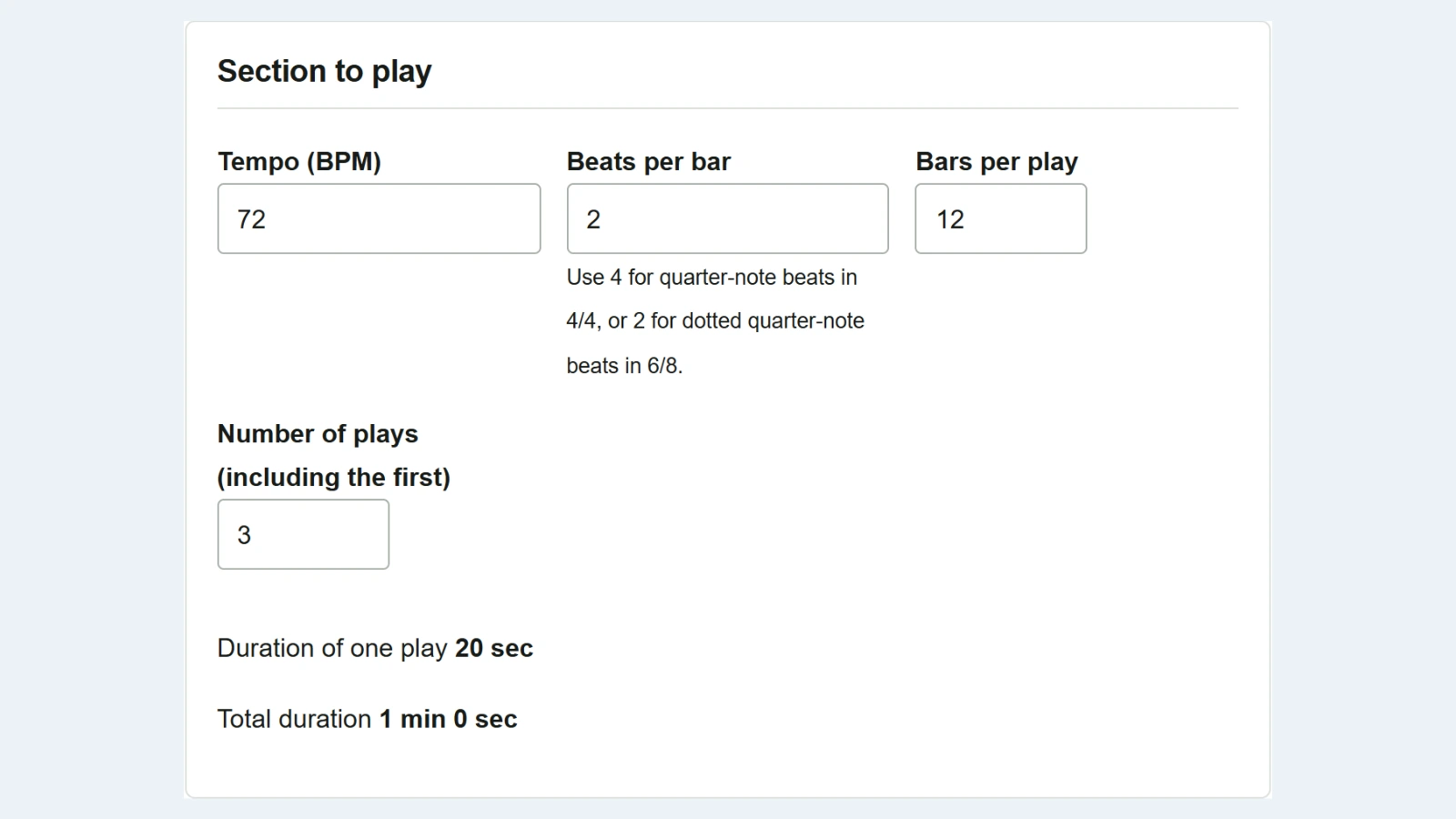
At an ensemble rehearsal, we decide to play a 12-bar interlude in 6/8 three times without stopping. The score says dotted quarter note = 72. The performance duration calculator shows the time for one play and the total as we change the inputs.
Count the dotted quarter note as one beat
A 6/8 bar contains six eighth notes. A dotted quarter note lasts three eighth notes, so this tempo marking gives two beats per bar.
- Enter
72in “Tempo (BPM)” and2in “Beats per bar”. - Enter
12in “Bars per play”. - Enter
3in “Number of plays (including the first)”. This means one play followed by two repeats. - The result is 20 seconds for one play and 1 minute in total.
Calculate the same passage with an eighth-note tempo
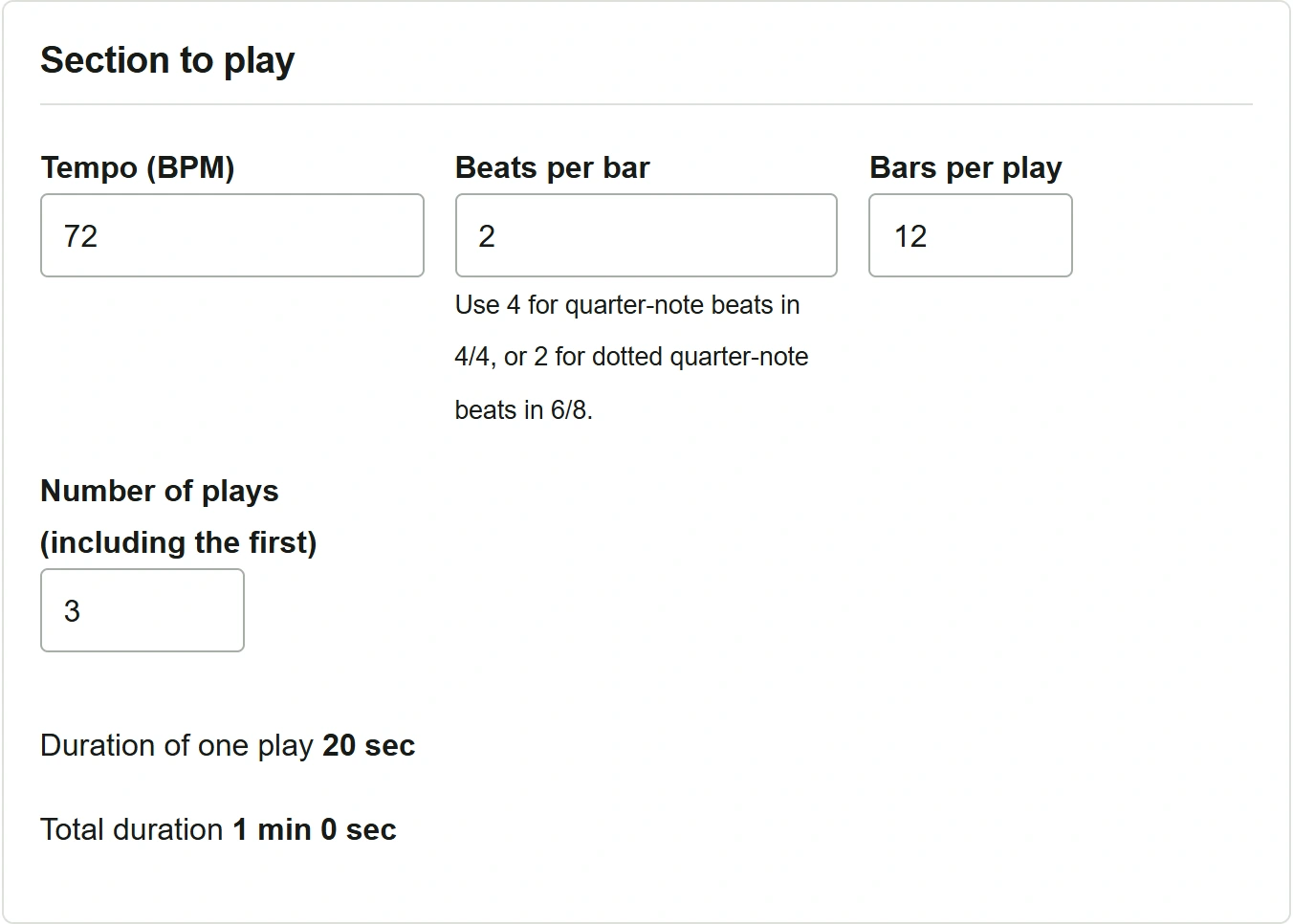
If the score expresses the same speed as eighth note = 216, change both tempo and beats per bar.
- Set “Tempo (BPM)” to
216and “Beats per bar” to6. - Keep the number of bars at
12and the number of plays at3. - Confirm that it still shows 20 seconds per play and 1 minute in total.
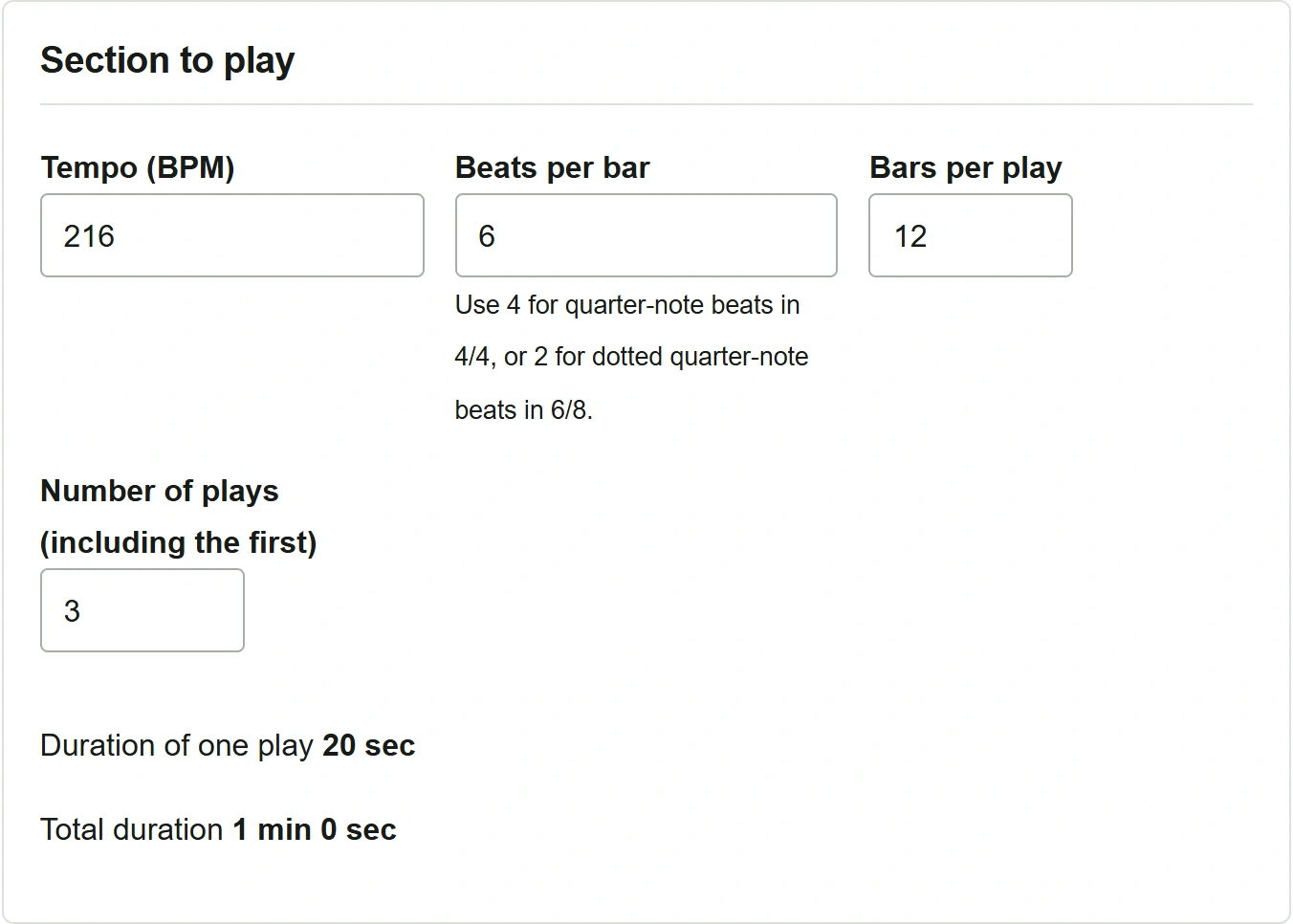
One play takes 60 ÷ BPM × beats per bar × bars seconds. If you change only the beats to 6 and leave the tempo at 72, the result is 60 seconds per play. When copying a BPM from a score, check which note value it represents.
Divide the music into sections to plan rehearsal time
If the tempo or time signature changes, split the piece at each change and add the section durations. When repeats take different endings, count the bars in the order you actually play them. Rests count toward bar length. Allow extra time for a count-in, for holding fermatas and for discussion before another take.